Tuesday, May 8, 2012

Resort Planning » Why you should start with your target market in mind


The problem » your potential visitor can’t distinguish your resort from the next

Imagine you’re dreaming of where to book your next holiday.  It’s winter, you’re over it, and you just want to escape with your partner somewhere sunny to relax, preferably at a beachside resort.  All your friends have been bragging on facebook about their amaaaaazing holiday in Bali, so you decide you wouldn’t mind experiencing Bali for yourself.  You start searching TripAdvisor for beachside resorts, and BAM! you’re inundated with thousands of listings - and endless photos of impossibly glamorous couples gazing lovingly at each other while sipping cocktails in an infinity pool.  Ok, so you get that there are a lot of infinity pools in Bali, but what’s so special about any particular resort over another?

Resort planning, resort brand, target market


Now imagine you’ve just been employed to market a brand new resort.  Obviously, you need to showcase something special about your propertyt (other than the infinity pool), but truth be told, what you’ve got to work with is just one of many beautiful resorts in the destination.  Damn – why didn’t those architects design something unique from the outset?

Now imagine you’re an independent resort owner.   Despite having one of the most upmarket properties in the destination, you’re reduced to discounting in order to stay afloat in this competitive market.   This increases your occupancy rates, but your RevPAR (revenue per available room) isn’t where you’d like it to be.


The challenge » incorporate a distinguishing brand feature into your resort design that appeals to the right target market


The solution » It’s too risky to wait until a marketing team is employed to develop your resort brand after the resort is built.  


Back at the concept stage, these are three things you can do to distinguish your resort from the next:resort from the next:


» Know your primary target market
·        Never think that the whole world is your target market.  When you promise something for everyone, you typically end up appealing to no-one.  What’s more, you end up throwing good money after bad trying to market to the whole world on a limited marketing budget.
·        Seek expert advice on what the primary target market is for your destination.  For example, at Tourism Queensland (a state tourism organisation), we have loads of research and insights into which target segments provide the greatest opportunity for each Queensland destination.  By picking a target market that already has your destination in their holiday consideration set, you’ve won half the battle.  Now use those consumer insights to understand exactly what they’re looking for – their underlying needs and wants.

» Design your brand
·        Excuse the obvious, but make sure it appeals to your primary target market.  To use a cruise ship analogy, an Active Explorer (consumer segment) is likely to choose an exploration cruise over a Disney cruise.  So if your target market is Active Explorers, then your brand would need to promise a holiday that’s about pushing boundaries and providing experiences that allow your guests to challenge themselves via physical activity. Their focus is on exploring the extremes of their physical environment and themselves, not about sipping cocktails in your infinity pool.
·        Make your brand different from the competitors in your destination.  Again, it’s valuable to seek expertise on this, because so many resort brands seem too bland to truly stand out from the crowd.

» Use the brand as a cornerstone for your resort design concept, not as an afterthought.
·        The brand should translate into signature experiences guests can expect that they won’t get elsewhere.   People remember meaningful experiences, personal encounters and defining moments of their holiday before they think about your specific hotel features.  So help them create those experiences, encounters and moments through your clever design.
·        Be creative in bringing your brand experiences to life in every design feature possible.  Let the colour, fragrance and design of your landscaping bring your brand story to life.  Let the pavement surface under bare feet enhance the guest experience. 

Here are some examples of resorts I’ve visited where the brand is distinctive, and cleverly integrated into all design aspects of the property.


Pulau Besar, Malacca, Malaysia

Resort planning, resort brand, target market


This island resort is no longer around, but back in the 90’s my travel agent passed me a brochure that had me intrigued from the front cover to back.  It was a hand-painted treasure map of sorts, promising an adventure on a mysterious island full of Malay folklore.  It spoke of sacred and historical sites waiting to be explored.  I immediately booked a weekend away, headed up to Malaysia, and hopped on a charming fishing boat (of questionable seaworthiness) to take me from the mainland over to this tiny island.  The resort was fairly basic, but true to its brand.  The traditional architecture and locally sourced artefacts spoke of another era.  Come to think of it, so did the food.  But the most memorable of experiences was reading the directional signs each morning and deciding which site to explore first – there was the Shrine of Seven Princesses, the Gua Yunus – a mysterious cave once inhabited by an old silat-practicing man, and a wishing well that could magically turn salt water into fresh water.   Pulau Besar was a great example of harnessing the power of story-telling, and integrating it into the design, marketing and operations of the property to give it an edge over other resorts.


QT Gold Coast, Queensland, Australia

Resort planning, resort brand, target market


One of the newest properties on the Gold Coast is QT Gold Coast – this is the first in a suite of designer hotel experiences set to open across Australia under the QT brand over the coming year.   The brand promises “something unique and untraditional, from our fun and quirky custom design to incredible food and bar experiences”.   And the design delivers on the brand promise to a tee.   I love the character of this property – the swanky staff are dressed like they’ve just stepped off a Pan Am flight from 1963.  The décor is playfully chic.  Step into the lift and check to see that the life-sized bikini-clad guest smiling from the back wall isn’t actually a mural.  Ditto for the toilet doors (a little creepy).   

Resort planning, resort brand, target market


I’m a big fan of their signature marketplace Bazaar Restaurant.  It truly is “something unique and untraditional”.  Each market station is hosted by a passionate chef, eager to explain the intricacies of their creations.  Favourite pickings: mini bubblegum fairyfloss, sherbert chocolate and cooked icecream. 


Gwinganna Lifestyle Retreat, Gold Coast, Queensland, Australia

Resort planning, resort brand, target market


Spas, like plunge pools, tend to be cloned around the world.  But this lifestyle retreat tucked away in the Gold Coast Hinterland has a distinctive “Australian Lifestyle” character integrated into its design, operations, and specifically, its spa.   Unlike many other Australian spas (often heavily South East Asian inspired), Gwinganna’s spa complex features local materials, with an elevated outdoor deck and a lounge overlooking a native spa garden.  The landscaping throughout the resort is minimal – meaning that they’ve retained most of the natural vegetatio

Thursday, May 3, 2012

Movement + Motion » Using an iconic transport mode to showcase your destination character


I’m sure you’ve noticed that there’s all too often a disconnect between what destination marketers promise in a destination brand, and what the on-the-ground experience is for visitors.   To put it politely, some of these promises can be more aspirational rather than deliverable!

But in my destination management experience, I’ve learnt a highly effective and visible way of showcasing your destination character on the ground.  The trick is to introduce (and if necessary, subsidise) an iconic transportation mode to the busiest part of your destination, e.g. along the mainstreet, the river, or the waterfront.  And when I say iconic, I mean it should be so distinctive that it distinguishes your destination from the next.  Of course, it also needs to be authentic to your destination brand.  The effect is this:

·        Transportation visually creates movement and movement – essential elements for bringing a place or a space to life
·        Your distinctive mode of transport (e.g. horse-and-carriage, tuk tuk, bumboat, trishaw or tram) can be a highly visual and colourful means of telling your destination story
·        The speed at which your transportation mode travels can be slightly disruptive to the surrounding flow of vehicular or pedestrian traffic – and this is a great thing if you want people to stop and pay attention!  Think of it as a moving billboard for your destination.  Or the equivalent of a theme park mascot.
·        Stimulates all the senses, creating more memorable experiences for locals and visitors.  A passing horse-and-carriage, for example, activates all your senses – sight, sound, and even smell!

Here’s a collection of places I’ve visited where the local transportation mode is etched in my memory as a colourful and inseparable part of the destination character.


Horse and carts on Gili Trawangan, Indonesia
destination character, movement + motion, destination design
The sound of hoofs in the sand is all you'll hear from this taxi


This tiny but popular resort island off Lombok has a charming laid-back character.  And although there are hundreds of laid-back island destinations in Indonesia, this one is popular with tourists looking to get off the beaten track because of its authentic character.   And as this picture shows, nothing says authentically laid-back like a horse and cart.  Especially when that's the only mode of transportation to get around the island.   


Golf buggies on Hamilton Island, Queensland, Australia
destination character, movement + motion, destination design

destination character, movement + motion, destination design
Oprah & Gayle commandeer a buggy


This is where I grew up - in the tourist area of the Whitsundays, famous for its 74 islands along the Great Barrier Reef.  And the most famous island is Hamilton Island where my parents owned a restaurant.  They also owned a golf buggy, because that's the main form of transport (coincidentally that's also how I first learnt to drive!).   The fleet of buggies zig-zagging across the island not only provide a fun mode of transportation, but from a destination management perspective, the buggies are also a key element in maintaining the resort character.  This is after all a small town in its own right - accommodating up to 5,000 guests and anywhere between 1,000 to 2,000 staff.
Several of the buggies are also themed - including a Batmobile and a limousine - injecting more fun into the destination character.  Even Oprah took a spin on a buggy when we invited her to Queensland, following our Tourism Queensland "Best Job In The World" campaign.  


Bumboats along the Singapore River
destination character, movement + motion, destination design
Traditional bumboats are an authentic link to Singapore's past


One of my first projects to revitalise the Singapore River & Marina Bay districts for the Singapore Tourism Board was to "bring life back to the river".  We did this by introducing bumboats to ply the waterways in an effort to visually draw attention to the river, adding colour and movement, and showcasing the rich local heritage.  


Horse-drawn carriages, Quebec, Canada
destination character, movement + motion, destination design

destination character, movement + motion, destination design
It's not just the memories that linger


Within Quebec’s Walled Fortress, you can still experience the sights, sounds and smells of the 1600’s.  Well, at new millennium prices.  The horse-drawn carriages add a romantic and multi-sensory charm to this heritage site, and are perfectly in character with the destination story.  Even my partner who wasn’t too chuffed with the smell (see picture above), fell in love with this city.


Tuk tuks in Phuket, Thailand
destination character, movement + motion, destination design


Part of the fun of Phuket is riding in one of the colourful tuk tuks at local prices.  Or at least trying to bargain for local prices.  These colourful cabs that line the streets are as much a part of the landscape as are floral-clad tourists haggling with stall owners for Red Bull t-shirts and wooden chopsticks.


New York City Yellow Taxis
destination character, movement + motion, destination design
The ubiquitous NY tourist photo with a line of yellow cabs


Yellow taxis are as quintessentially New York as the Empire State Building, hot dogs and pastrami on rye.   The fact that there are just so many of them makes these bright cabs stand out as a city icon.  The lesson for destination planners: pick a unique and highly visible design feature – the colour yellow in this case – and use it generously as part of a destination theme.


Disneyland, Anaheim, USA
destination character, movement + motion, destination design
Movement + Motion


Every world within the Disneyland theme park features at least one different mode of transport – and they’re all colourful and multi-sensory.  Apart from carrying guests around the park, or transporting the audience through a ride, these people-movers are an integral part of the park design to create movement and motion.   Even on a quiet day, if you stand still there appears to be so much activity around you.  This is because there’s always a train, a monorail, a horse and carriage, or a multitude of other modes of transportation meandering throughout the park in the background.


Trishaws in Singapore
destination character, movement + motion, destination design
Mark Webber tries to hitch a ride on a trishaw


If you’re walking through the crowded streets of Singapore’s ethnic quarters – Little India, Chinatown, Arab Street, or the Singapore River – you’ll more than likely hear the quaint (if not annoying) ringaling of bicycle bells as a fleet of trishaws comes forcing its way through the crowd.  These trishaw uncles are true destination characters, and an authentic part of the Singapore heritage landscape.

Sunday, April 29, 2012

Destination Development + Destination Character » 3 things I love about the new Surfers Paradise Foreshore Redevelopment


destination_development Surfers_Paradise_Foreshore_Redevelopment


How many successful examples spring to mind if you’re asked to think of a destination that has been transformed whilst retaining its own distinctive destination character?  Not just in the way it’s marketed, but also in terms of its architecture, street design and built tourism product?
The transformation of Las Vegas in the 1990’s from a seedy gambling town into an entertainment capital has for a long time fascinated me.  Without losing its iconic Sin City personality, Vegas has dialled up the charm, appealing to a much broader (and sustainable) target market.
And now closer to home in Queensland, I’m equally fascinated at how Australia’s “Famous for Fun” tourist capital, the Gold Coast, is undergoing a similar transformation.  I’m talking specifically about Surfers Paradise (aka the glitter strip) which up until a year ago was the Gold Coast’s equivalent of the Hollywood strip – a tired mix of cheap t-shirt and souvenir shops, deep-fried food, bemused tourists, shady characters and jaded locals.  Of course, there’s much more to the Gold Coast than Surfers Paradise, but once a destination’s jewel in the crown has lost its lustre, the whole crown somehow loses its shine.
Fast-forward 12 months, and Surfers Paradise has gone into overdrive to reshape its destination image as a much more upmarket act whilst staying true to its surf culture and beach holiday heritage.  It’s attracted some serious development, with the opening of the Hilton Surfers Paradise, an upgrade to Cavill Mall, and a complete redevelopment of the foreshore. 
Last weekend, I took my partner away to the Gold Coast for her birthday, and took the opportunity to check out the new developments.  The standout project I believe to be the catalyst for transforming the destination character is the new Surfers Paradise Foreshore Redevelopment.  As a public space, it works so well.  But unlike so many other redeveloped waterfront spaces I’ve visited around the world, this one truly captures the unique local identity – it is quintessentially the Gold Coast, remodelled in the most charming of designs.  Here are the top three things I love about the new foreshore design:
1.      Distinctive local character
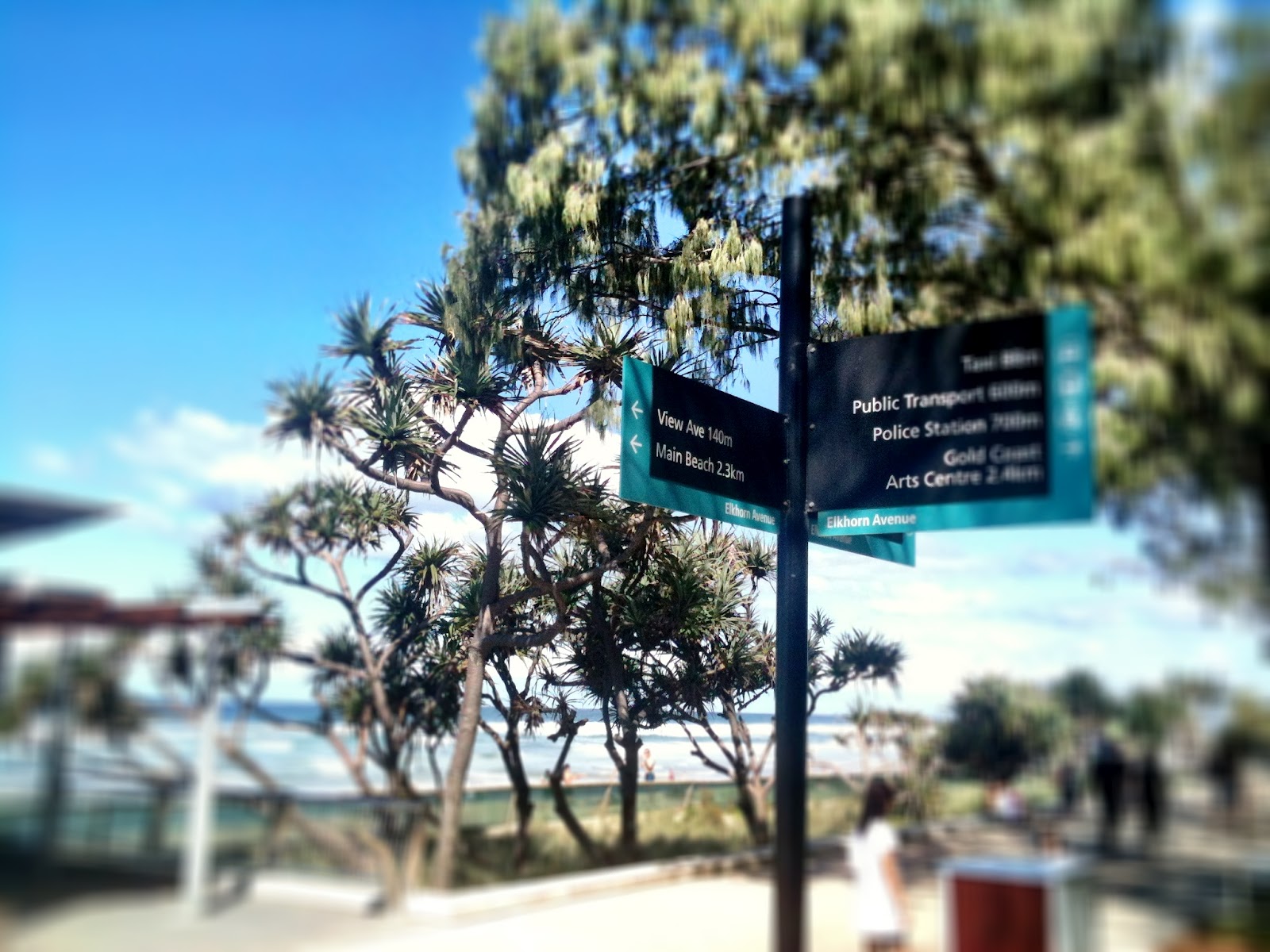
Everything –from the surf-inspired street furniture, to the quirky signage – is a nod to the Gold Coast’s apt destination brand “Famous for Fun”.  It’s all co-ordinated, and with a distinctive local character.

destination_development Surfers_Paradise_Foreshore_Redevelopment

destination_development Surfers_Paradise_Foreshore_Redevelopment

destination_development Surfers_Paradise_Foreshore_Redevelopment

destination_development Surfers_Paradise_Foreshore_Redevelopment


2.      Designing to consumer insights
Having grown up by the seaside in a resort town,  I’ve observed one thing to be true – nearly everyone loves the beach, but generally from the comfort of the shore.  A trip to the beach is less likely to entail a dip in the water or a sunbaking session, and for the majority is more likely to involve a waterfront BBQ or a picnic, a walk, a throw of a ball, or watching your toddler tirelessly chase seagulls.
And so from a design perspective, the Surfers Paradise Foreshore Redevelopment has catered precisely to this consumer insight by extending the beach experience well beyond the high tide mark.


destination_development Surfers_Paradise_Foreshore_Redevelopment

destination_development Surfers_Paradise_Foreshore_Redevelopment

destination_development Surfers_Paradise_Foreshore_Redevelopment

destination_development Surfers_Paradise_Foreshore_Redevelopment


destination_development Surfers_Paradise_Foreshore_Redevelopment


3.      Designing for Activity
Active spaces always attract activity.   We are hardwired to be attracted to places where we can see other people having fun, and quite often bypass (or actively avoid) spaces that appear to be devoid of activity.
The foreshore redevelopment design has taken this principle and enhanced it – with things to see, do, read, or play with every few steps.    Even though you think of it as one big public space, it’s really a series of cleverly-designed interlinking smaller spaces, each designed with a specific activity-generating feature every few metres. 


destination_development Surfers_Paradise_Foreshore_Redevelopment

destination_development Surfers_Paradise_Foreshore_Redevelopment

destination_development Surfers_Paradise_Foreshore_Redevelopment


Design take-out:
I think the Surfers Paradise Foreshore Redevelopment is one of the best contemporary examples of public waterfront spaces, because:
·        its design truly lives up to the destination brand (Gold Coast – Famous for Fun)
·        it showcases a distinctly Gold Coast flavour (as opposed to a generic contemporary beach-themed design)
·        it has been purposefully designed to cater to some quite specific consumer insights into the way visitors undertake their beach experience, and
·        its activity-generating spaces give people a myriad of reasons for wanting to spend time using this public space.

Further reading »
Designer:             PLACE Design Group | www.placedesigngroup.com
Client:                   Gold Coast City Council | www.goldcoast.qld.gov.au