Showing posts with label Destination Development. Show all posts

Monday, May 28, 2012

Can destination character be designed when you're planning a new city?


destination_development destination_branding destination_character Suzhou China
SUZHOU » one of over 100 new Chinese cities now being built or planned 


I was recently asked this question by a planner when I spent some time in China.  His interest stemmed from a long line-up of master plans he was responsible for delivering, all for new cities.   He pointed out that it’s challenging enough to create a destination character for an existing city, let alone for a city of several million that hasn’t even been built yet.

This question thrilled me for two reasons: firstly, destination character is often overlooked by clients (and quite often their planners) in rapidly developing countries like China.  And secondly, when destination character is a consideration, it’s usually code for “design for me a new industrial / tourism / technology city that is progressive like other world-class cities.”  Although I understand the desire to be progressive, this only skims the surface of what destination character can deliver.

I believe that for a new city to take off and compete with other cities it has to be more than just modern – it needs to have a distinctive character unlike no other.  This should be encapsulated in the destination brand - designed at the beginning, and not at the end, of the master planning process.   And so my response to the question was that not only is it possible to design destination character for a new, unplanned city, but the fact that a city isn’t yet developed provides an enormous opportunity – to create your new destination brand from scratch, and to incorporate the brand into every design aspect of the master plan. 

Whilst there are many components to a destination brand (see the Gold Coast brand summary below as an example), there are two aspects of destination branding that I think have particular relevance to planners – Destination Personality and Destination Experiences.

destination_development destination_branding destination_character Gold_Coast


Destination Personality

If you want to be noticed at a dinner party, you need to have a distinctive personality.  People will be captivated by your colourful stories, your style, your attitude, and behavioural nuances.  Likewise, a city that wants to attract attention needs to have its own charming personality that sets it apart from other destinations.  Although destination character develops over time, a branding expert can help develop an appropriate personality from the outset which planners can incorporate into design aspects such as landuse mix, choice of recreational uses, signage, transportation modes, methods of activating open spaces etc.   Consider, for example, the differences between two iconic cities with completely different personalities – New York and Paris.
  • New York: exciting, provocative, slightly neurotic
  • Paris: romantic, stylish, authentic

Both cities share similar functional attributes, but the delivery of these functions reflects their opposing personalities.


Destination Experiences

Although a new city might have a functional theme based on a key economic driver (e.g. technology, industrial park, tourism etc), as planners we need to remember that it’s not what jobs people do in that city that define the destination character, it’s how people live their lives and how they interact with the city, and with each other.  Imagine you’re thinking of relocating to a new city.  Apart from the functional reasons of, say, a job offer, what are the key deciding factors?  More often than not, it’s considerations like:
  •  Are there enough things to see and do / places to visit in my spare time?
  • Are there many opportunities for making new friends?
  • Will I find enough interesting places to spend time with my friends or family?


As planners, we have enormous opportunities to creatively inject the destination brand personality into each of these touch points, so that the collective experiences of the city’s residents and visitors are reflective of a city with a compelling, exciting and distinctive personality.

To illustrate how the brand personality and destination experience can be delivered through specific design features, I’d like to showcase three examples which I’ll share over the next few blog posts.  The first example is outlined below.

Case study #1: GEELONG, Victoria, Australia

destination_development destination_branding destination_character Geelong


Description: Heritage seaside port town, known for being home to car manufacturer Ford Australia and also the Geelong Football Club, nicknamed The Cats.

Destination personality: Optimistic, relaxed, proud, unpretentious

Iconic destination experiences:  Geelong is popular for its historic foreshore.   Tourist and recreational facilities are clustered along the Waterfront Geelong (revitalisation project during the 1990s), and include: The Baywalk Bollards | Yarra Street Pier | Cunningham Pier | Steampacket Quay | the Carousel Pavilion | The Royal Geelong Yacht Club | popular swimming and recreation area at Eastern Beach.

Distinctive design features that reflect the destination personality:  What sets Geelong apart from other heritage seaside towns is not just the concentration of recreational foreshore facilities, but most notably, the famous local installation art known as the Baywalk Bollards.  Created by local artist Jan Mitchell in the mid 1990s, this themed series features over 100 colourfully-painted sculptures depicting famous local characters and events.   The bollards are cleverly sited in the most unexpected of places all along the waterfront, and are a highly visual medium for telling the story of Geelong.  Locals proudly identify with the artwork, and visitors are fascinated by these characters and the stories behind them.  Each piece is sculpted from huge wooden pylons, many recovered from the Yarra Street Pier which was destroyed by fire in the 1980’s and later removed.  


destination_development destination_branding destination_character Geelong


Some of the memorable historic characters featured include former Prime Minister of Australia John Howard, explorer Mathew Flinders overlooking the bay he discovered in 1802, the historic Geelong Footballer near the old Hi-Lite Park site and various sea captains and the rustic fisherman at Fisherman’s Pier.

destination_development destination_branding destination_character Geelong

destination_development destination_branding destination_character Geelong

destination_development destination_branding destination_character Geelong


destination_development destination_branding destination_character Geelong

destination_development destination_branding destination_character Geelong


destination_development destination_branding destination_character Geelong


The popularity of this installation art series is a testament to the distinctive destination character of Geelong – a city that is optimistic, relaxed, proud, and unpretentious.


This is the first of a three-part blog, with two more posts to uploaded over the coming weeks.  Click on any of the “subscribe” links if you’d like to be informed of when the next post is uploaded.


Thursday, May 3, 2012

Movement + Motion » Using an iconic transport mode to showcase your destination character


I’m sure you’ve noticed that there’s all too often a disconnect between what destination marketers promise in a destination brand, and what the on-the-ground experience is for visitors.   To put it politely, some of these promises can be more aspirational rather than deliverable!

But in my destination management experience, I’ve learnt a highly effective and visible way of showcasing your destination character on the ground.  The trick is to introduce (and if necessary, subsidise) an iconic transportation mode to the busiest part of your destination, e.g. along the mainstreet, the river, or the waterfront.  And when I say iconic, I mean it should be so distinctive that it distinguishes your destination from the next.  Of course, it also needs to be authentic to your destination brand.  The effect is this:

·        Transportation visually creates movement and movement – essential elements for bringing a place or a space to life
·        Your distinctive mode of transport (e.g. horse-and-carriage, tuk tuk, bumboat, trishaw or tram) can be a highly visual and colourful means of telling your destination story
·        The speed at which your transportation mode travels can be slightly disruptive to the surrounding flow of vehicular or pedestrian traffic – and this is a great thing if you want people to stop and pay attention!  Think of it as a moving billboard for your destination.  Or the equivalent of a theme park mascot.
·        Stimulates all the senses, creating more memorable experiences for locals and visitors.  A passing horse-and-carriage, for example, activates all your senses – sight, sound, and even smell!

Here’s a collection of places I’ve visited where the local transportation mode is etched in my memory as a colourful and inseparable part of the destination character.


Horse and carts on Gili Trawangan, Indonesia
destination character, movement + motion, destination design
The sound of hoofs in the sand is all you'll hear from this taxi


This tiny but popular resort island off Lombok has a charming laid-back character.  And although there are hundreds of laid-back island destinations in Indonesia, this one is popular with tourists looking to get off the beaten track because of its authentic character.   And as this picture shows, nothing says authentically laid-back like a horse and cart.  Especially when that's the only mode of transportation to get around the island.   


Golf buggies on Hamilton Island, Queensland, Australia
destination character, movement + motion, destination design

destination character, movement + motion, destination design
Oprah & Gayle commandeer a buggy


This is where I grew up - in the tourist area of the Whitsundays, famous for its 74 islands along the Great Barrier Reef.  And the most famous island is Hamilton Island where my parents owned a restaurant.  They also owned a golf buggy, because that's the main form of transport (coincidentally that's also how I first learnt to drive!).   The fleet of buggies zig-zagging across the island not only provide a fun mode of transportation, but from a destination management perspective, the buggies are also a key element in maintaining the resort character.  This is after all a small town in its own right - accommodating up to 5,000 guests and anywhere between 1,000 to 2,000 staff.
Several of the buggies are also themed - including a Batmobile and a limousine - injecting more fun into the destination character.  Even Oprah took a spin on a buggy when we invited her to Queensland, following our Tourism Queensland "Best Job In The World" campaign.  


Bumboats along the Singapore River
destination character, movement + motion, destination design
Traditional bumboats are an authentic link to Singapore's past


One of my first projects to revitalise the Singapore River & Marina Bay districts for the Singapore Tourism Board was to "bring life back to the river".  We did this by introducing bumboats to ply the waterways in an effort to visually draw attention to the river, adding colour and movement, and showcasing the rich local heritage.  


Horse-drawn carriages, Quebec, Canada
destination character, movement + motion, destination design

destination character, movement + motion, destination design
It's not just the memories that linger


Within Quebec’s Walled Fortress, you can still experience the sights, sounds and smells of the 1600’s.  Well, at new millennium prices.  The horse-drawn carriages add a romantic and multi-sensory charm to this heritage site, and are perfectly in character with the destination story.  Even my partner who wasn’t too chuffed with the smell (see picture above), fell in love with this city.


Tuk tuks in Phuket, Thailand
destination character, movement + motion, destination design


Part of the fun of Phuket is riding in one of the colourful tuk tuks at local prices.  Or at least trying to bargain for local prices.  These colourful cabs that line the streets are as much a part of the landscape as are floral-clad tourists haggling with stall owners for Red Bull t-shirts and wooden chopsticks.


New York City Yellow Taxis
destination character, movement + motion, destination design
The ubiquitous NY tourist photo with a line of yellow cabs


Yellow taxis are as quintessentially New York as the Empire State Building, hot dogs and pastrami on rye.   The fact that there are just so many of them makes these bright cabs stand out as a city icon.  The lesson for destination planners: pick a unique and highly visible design feature – the colour yellow in this case – and use it generously as part of a destination theme.


Disneyland, Anaheim, USA
destination character, movement + motion, destination design
Movement + Motion


Every world within the Disneyland theme park features at least one different mode of transport – and they’re all colourful and multi-sensory.  Apart from carrying guests around the park, or transporting the audience through a ride, these people-movers are an integral part of the park design to create movement and motion.   Even on a quiet day, if you stand still there appears to be so much activity around you.  This is because there’s always a train, a monorail, a horse and carriage, or a multitude of other modes of transportation meandering throughout the park in the background.


Trishaws in Singapore
destination character, movement + motion, destination design
Mark Webber tries to hitch a ride on a trishaw


If you’re walking through the crowded streets of Singapore’s ethnic quarters – Little India, Chinatown, Arab Street, or the Singapore River – you’ll more than likely hear the quaint (if not annoying) ringaling of bicycle bells as a fleet of trishaws comes forcing its way through the crowd.  These trishaw uncles are true destination characters, and an authentic part of the Singapore heritage landscape.

Sunday, April 29, 2012

Destination Development + Destination Character » 3 things I love about the new Surfers Paradise Foreshore Redevelopment


destination_development Surfers_Paradise_Foreshore_Redevelopment


How many successful examples spring to mind if you’re asked to think of a destination that has been transformed whilst retaining its own distinctive destination character?  Not just in the way it’s marketed, but also in terms of its architecture, street design and built tourism product?
The transformation of Las Vegas in the 1990’s from a seedy gambling town into an entertainment capital has for a long time fascinated me.  Without losing its iconic Sin City personality, Vegas has dialled up the charm, appealing to a much broader (and sustainable) target market.
And now closer to home in Queensland, I’m equally fascinated at how Australia’s “Famous for Fun” tourist capital, the Gold Coast, is undergoing a similar transformation.  I’m talking specifically about Surfers Paradise (aka the glitter strip) which up until a year ago was the Gold Coast’s equivalent of the Hollywood strip – a tired mix of cheap t-shirt and souvenir shops, deep-fried food, bemused tourists, shady characters and jaded locals.  Of course, there’s much more to the Gold Coast than Surfers Paradise, but once a destination’s jewel in the crown has lost its lustre, the whole crown somehow loses its shine.
Fast-forward 12 months, and Surfers Paradise has gone into overdrive to reshape its destination image as a much more upmarket act whilst staying true to its surf culture and beach holiday heritage.  It’s attracted some serious development, with the opening of the Hilton Surfers Paradise, an upgrade to Cavill Mall, and a complete redevelopment of the foreshore. 
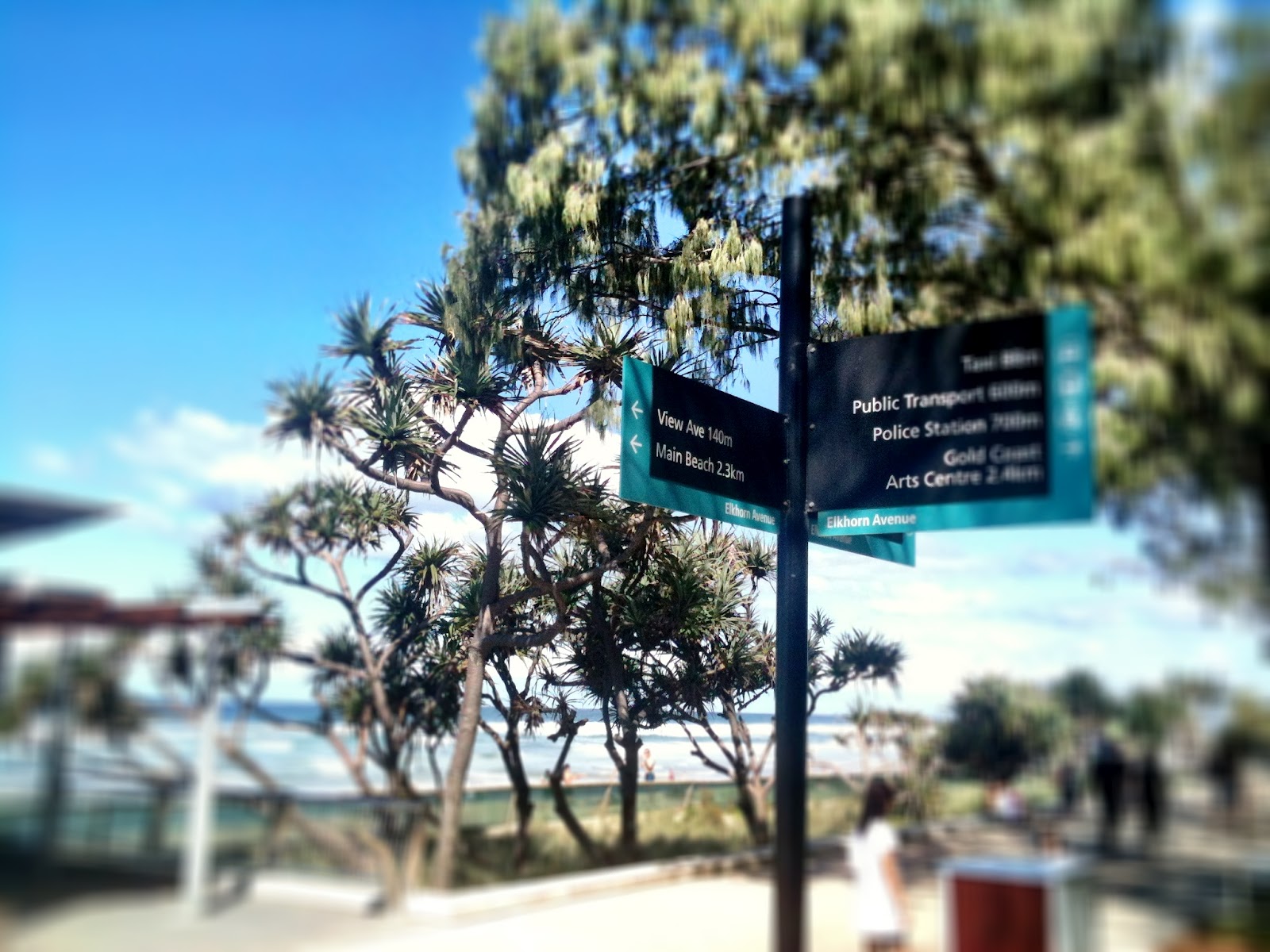
Last weekend, I took my partner away to the Gold Coast for her birthday, and took the opportunity to check out the new developments.  The standout project I believe to be the catalyst for transforming the destination character is the new Surfers Paradise Foreshore Redevelopment.  As a public space, it works so well.  But unlike so many other redeveloped waterfront spaces I’ve visited around the world, this one truly captures the unique local identity – it is quintessentially the Gold Coast, remodelled in the most charming of designs.  Here are the top three things I love about the new foreshore design:
1.      Distinctive local character
Everything –from the surf-inspired street furniture, to the quirky signage – is a nod to the Gold Coast’s apt destination brand “Famous for Fun”.  It’s all co-ordinated, and with a distinctive local character.

destination_development Surfers_Paradise_Foreshore_Redevelopment

destination_development Surfers_Paradise_Foreshore_Redevelopment

destination_development Surfers_Paradise_Foreshore_Redevelopment

destination_development Surfers_Paradise_Foreshore_Redevelopment


2.      Designing to consumer insights
Having grown up by the seaside in a resort town,  I’ve observed one thing to be true – nearly everyone loves the beach, but generally from the comfort of the shore.  A trip to the beach is less likely to entail a dip in the water or a sunbaking session, and for the majority is more likely to involve a waterfront BBQ or a picnic, a walk, a throw of a ball, or watching your toddler tirelessly chase seagulls.
And so from a design perspective, the Surfers Paradise Foreshore Redevelopment has catered precisely to this consumer insight by extending the beach experience well beyond the high tide mark.


destination_development Surfers_Paradise_Foreshore_Redevelopment

destination_development Surfers_Paradise_Foreshore_Redevelopment

destination_development Surfers_Paradise_Foreshore_Redevelopment

destination_development Surfers_Paradise_Foreshore_Redevelopment


destination_development Surfers_Paradise_Foreshore_Redevelopment


3.      Designing for Activity
Active spaces always attract activity.   We are hardwired to be attracted to places where we can see other people having fun, and quite often bypass (or actively avoid) spaces that appear to be devoid of activity.
The foreshore redevelopment design has taken this principle and enhanced it – with things to see, do, read, or play with every few steps.    Even though you think of it as one big public space, it’s really a series of cleverly-designed interlinking smaller spaces, each designed with a specific activity-generating feature every few metres. 


destination_development Surfers_Paradise_Foreshore_Redevelopment

destination_development Surfers_Paradise_Foreshore_Redevelopment

destination_development Surfers_Paradise_Foreshore_Redevelopment


Design take-out:
I think the Surfers Paradise Foreshore Redevelopment is one of the best contemporary examples of public waterfront spaces, because:
·        its design truly lives up to the destination brand (Gold Coast – Famous for Fun)
·        it showcases a distinctly Gold Coast flavour (as opposed to a generic contemporary beach-themed design)
·        it has been purposefully designed to cater to some quite specific consumer insights into the way visitors undertake their beach experience, and
·        its activity-generating spaces give people a myriad of reasons for wanting to spend time using this public space.

Further reading »
Designer:             PLACE Design Group | www.placedesigngroup.com
Client:                   Gold Coast City Council | www.goldcoast.qld.gov.au